
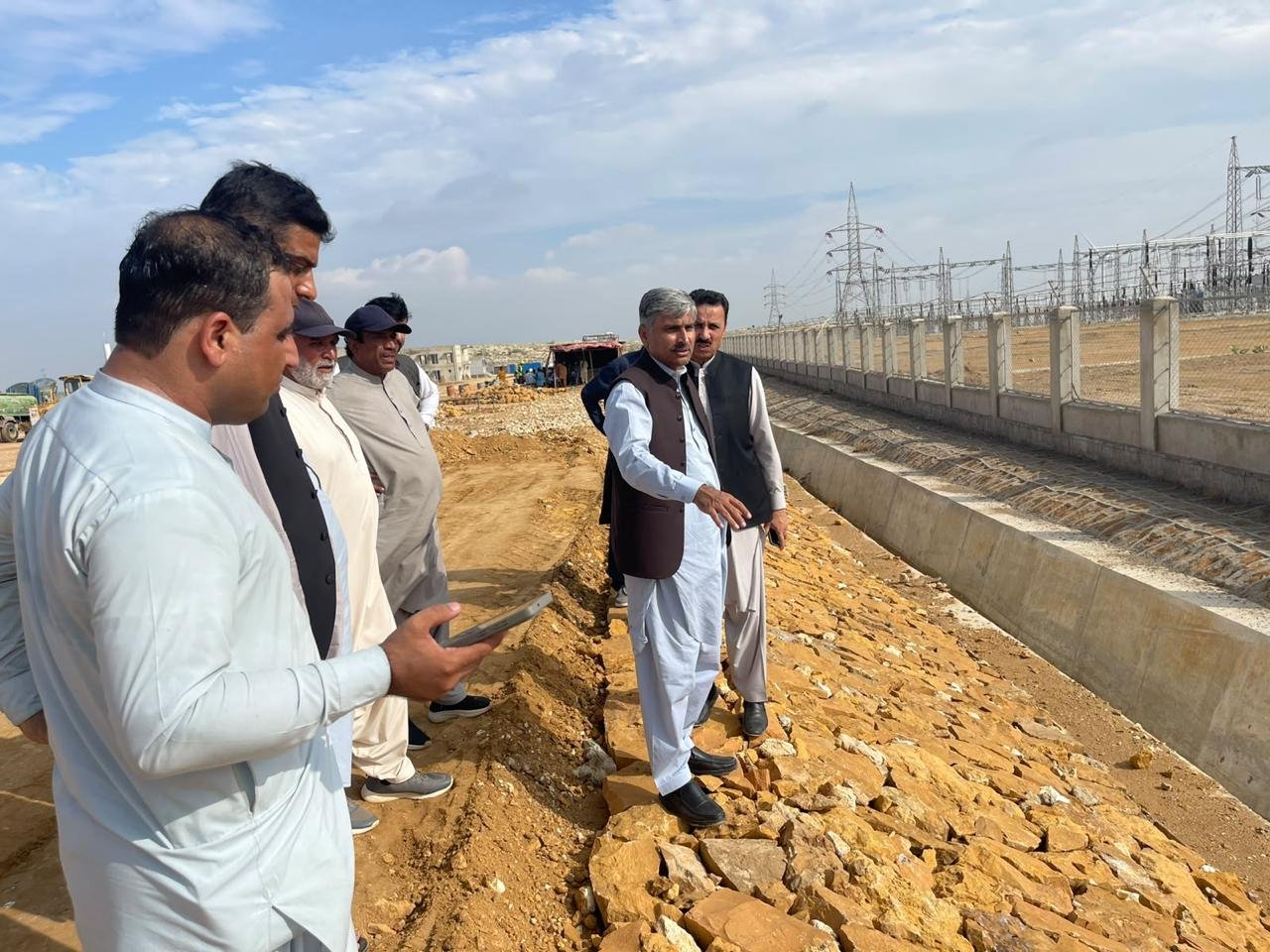
On a large construction site, buildings naturally draw attention. The drain along a boundary wall can receive less of it, even though it forms a distinct part of the infrastructure. Giving drainage its own review makes its scope, condition and remaining work easier to discuss.
Tameer Associates’ portfolio includes two separate NGC projects at Jhampir-II: the colony and allied civil works, valued at PKR 628.48 million, and the storm water drain outside the rear and right boundary wall, valued at PKR 105 million. The supplied photographs record a combined visit covering both projects.
Start with the drawing and the location
A site photograph becomes more useful when the reader knows which part of the work it shows. A reference to the boundary, drain section or drawing helps distinguish a discussion about one area from the status of the full project.
The Jhampir-II images show both a discussion beside the drainage channel and a review of drawings during the visit. We have placed them in the relevant project galleries so that visitors can see the work in context. They do not imply that either contract has been completed or formally accepted.
Keep the whole route in view
Drainage reviews need to look beyond one finished stretch. Blockages, accumulated sediment and erosion are important observations to record. The US Federal Highway Administration’s drainage inspection guidance identifies these as recurring issues in road drainage.
Its maintenance guidance also highlights debris removal and erosion control for lined and unlined channels. Those references provide useful general principles; they are not the design standard or acceptance criteria for the Jhampir-II contract.
Separate observations from acceptance
A practical visit note can state the location, the observation, any action requested and who will follow it up. A photograph attached to that note makes the discussion easier to revisit. Where a measurement or test is needed, the result should be recorded separately and reviewed against the approved requirements.
This approach helps avoid a common communication problem: a photograph of a finished-looking section being interpreted as confirmation that the entire drainage system is ready. Clear descriptions are useful to the site team, the client and anyone reviewing the project later.
One visit, two project records
At Tameer Associates, the website keeps the Jhampir-II colony and drain as separate portfolio entries because their scopes and contract values are different. The combined visit connects them without merging those records. Explore the construction gallery to see the photographs, or review our wider infrastructure portfolio across Pakistan.