
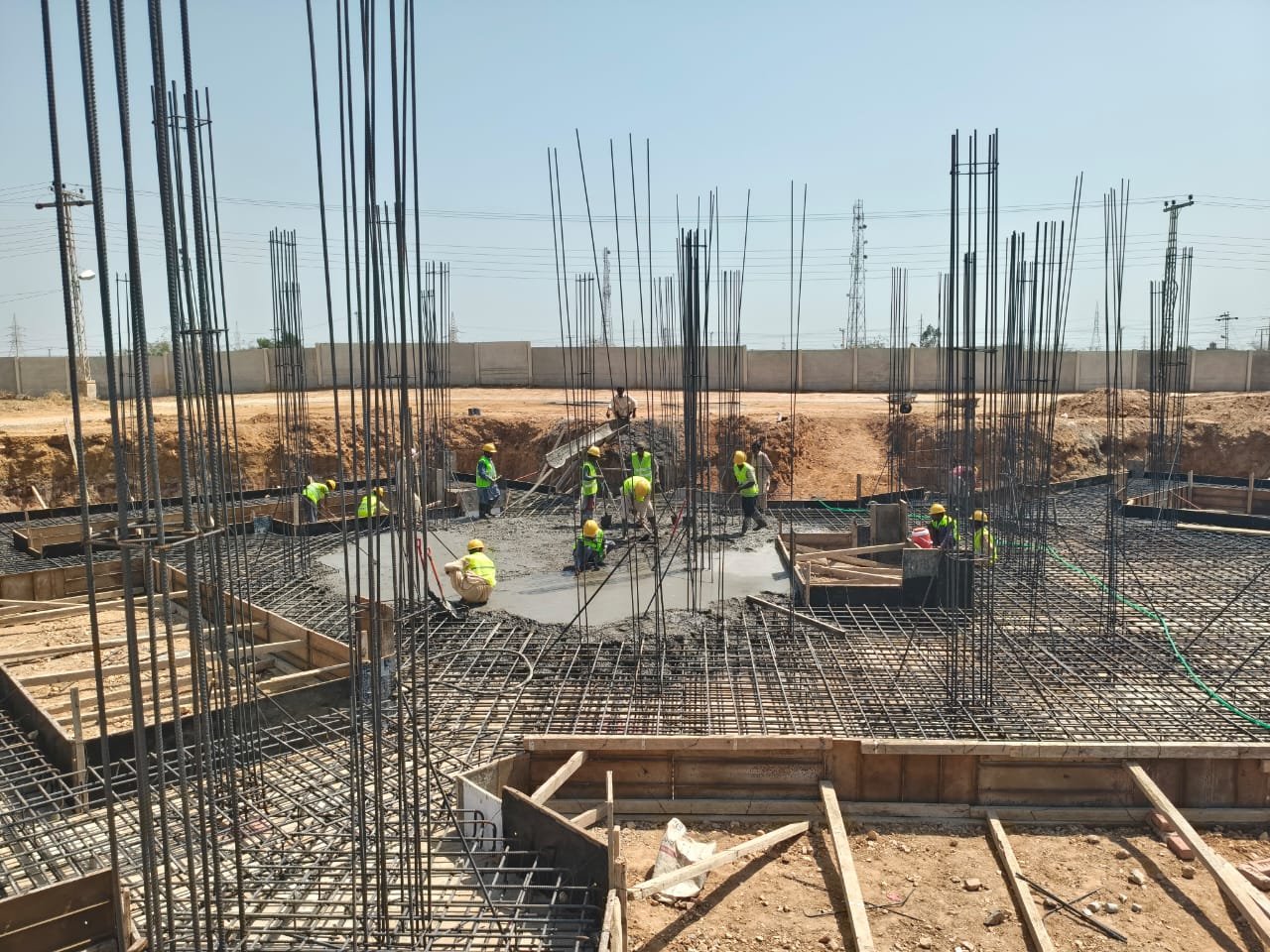
The day of a concrete pour is easy to photograph. There is a mixer at the work front, reinforcement in place and a crew placing and levelling the concrete. The quieter work that follows deserves just as much attention.
Our Jamshoro TSG building gallery shows the bed pour and the team at work. These are progress photographs, not a record of mix approval, test results or subsequent curing. Keeping those distinctions clear is part of communicating construction work accurately.
Curing is about moisture and temperature
Concrete develops its properties through hydration. Curing manages moisture and temperature so that this process can continue after placement. NRMCA’s CIP 11 guidance on curing in-place concrete explains why excessive moisture loss and unsuitable temperature conditions can affect the intended performance.
The same guidance describes methods that add water and methods that retain existing moisture. The selected method must suit the concrete, the exposed surface and the project specification. Duration should follow the applicable specification and conditions rather than a single rule applied to every pour.
Plan the next shift before the mixer arrives
For a site team, the practical question is who takes responsibility once finishing is complete. A pour plan can identify the person responsible, the materials needed and the handover between shifts. That avoids leaving an important task dependent on an informal assumption that another crew will handle it.
It is also worth recording which area was poured. A date on a photograph is useful, but a location tied to the drawing or pour reference makes the record much easier to retrieve later. Delivery records, inspection requests and photographs should tell the same story.
What progress photographs do and do not show
A wide photograph can explain the scale of a bed pour and the arrangement of the work front. A closer view may show placement activity or the location of formwork. Neither replaces the engineer’s inspection or the project’s acceptance records.
This is why Tameer Associates presents the Jamshoro images as site progress. The project page keeps the scope, client and photographs together, while providing a separate place for departmental letters and certificates when available. It allows a visitor to understand the work without treating a photograph as a performance certificate.
Follow the work at Jamshoro
The TSG project also has a separate groundbreaking update, with the ceremony and architectural model. Together, those records show different stages of one project: the occasion that marked its beginning and the construction activity that followed.
For project-specific construction or curing decisions, the approved specification and responsible engineer’s instructions remain the governing references. To discuss Tameer’s civil construction services, contact our Lahore office.